Small Preparation Habits That Prevent Big Problems Outside
August 15, 2026At the trailhead, ask one question before setting out: if the walk takes longer than expected, can everyone finish safely after daylight fades? A short loop can become a slow return when someone needs a rest, a path is harder to follow, or weather changes the ground. You do not need to carry everything, but a flashlight, spare power, route note, and dry layer can improve decisions when the easy plan stops being easy.
The decision begins before the trailhead
A familiar route can still cause trouble. You leave work for a quick woodland walk, expecting to return before dusk. Your phone is charged, and a small light is somewhere in the pack. Later, you discover the light switched on inside the bag, its battery is nearly empty, or the trail looks different in fading light.
Match your kit to the return, not the departure. Consider how long the slowest person might take, what happens if someone needs water or a break, and whether the route has confusing junctions. Add time for those ordinary delays. A local walk may not require an expedition pack, but it does require enough equipment to make a calm choice if the schedule slips.
Check the forecast close to leaving and consider the route's exposed sections, phone coverage, and road crossings. A dry path can become slippery after rain, while wind can make a warm evening feel much colder. For access restrictions, lighting rules, and other local requirements, consult current guidance from the relevant land manager or official authority because regulations can change.
A small test catches the weak link
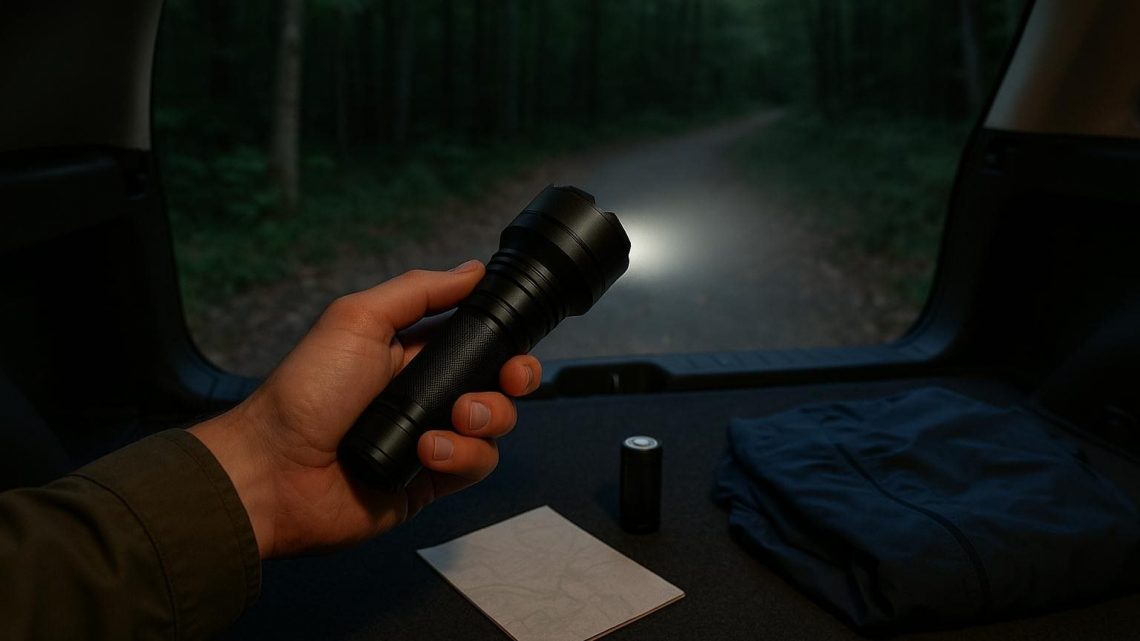
An emergency flashlight is useful only if you can find it, operate it, and trust its condition. Switch it on briefly before leaving. Check for a steady beam, a responsive switch, and a lens free from mud or condensation. Flickering, a slow start, or other unusual behavior is a reason to investigate.
If the light has been stored for a long time, inspect its battery compartment for corrosion, residue, or loose contacts. Follow the manufacturer's guidance for compatible batteries and charging. Do not mix battery types or leave damaged cells in equipment. For a rechargeable unit, check its charge before the trip. When darkness would have serious consequences, carry a separate light rather than relying on one device.
Store the flashlight where it cannot be switched on accidentally and keep it away from wet clothing or leaking bottles. Dry it after a damp outing. If it has been dropped, inspect the body, lens, seal, and switch; it may still turn on even if its moisture protection is compromised.
Pack for the return, not the departure
A compact kit should address likely problems without becoming so bulky that you leave it behind. For a dusk walk, check the following:
– Primary flashlight: Test the beam and switch before leaving.
– Spare light or fresh compatible power: Keep it separate from the primary unit.
– Route information: Save the route offline or carry a simple written note.
– Phone and contact plan: Confirm the charge and tell someone the intended return time.
– Weather layer: Choose one that remains useful if the walk becomes slower.
– Water and basic first-aid supplies: Pack for the route, conditions, and group.
– Small waterproof bag: Protect electronics, keys, and paper information.
Not every outing needs every item. A short trail near home may require less than a remote route with limited reception. Base the decision on isolation, weather, terrain, group needs, and the likelihood of returning in darkness. With children, older walkers, or anyone with a medical concern, allow more time and carry supplies that support their needs rather than relying on speed.
Keep the light accessible. A flashlight buried under a jacket is not ready when someone needs both hands for balance. Store it in a consistent pocket, and tell the group where the spare is kept.
When the route changes after dark
If the group reaches a junction later than planned, do not hurry, take an unverified shortcut, or rely on a phone screen held close to the face. Stop in a stable place, confirm the route, and decide whether continuing is sensible. Darkness reduces visual information, and tiredness makes familiar turns easier to miss.
Use the beam to inspect the immediate ground before moving: roots, loose stones, puddles, and edges matter more than seeing far down the trail. Angle the light so it helps the person walking without shining into another person's eyes. Keep the group together where the route or conditions require it, and move at the pace of the least confident member.
If the return becomes uncertain, contact the person expecting you and explain the change. In a genuine emergency, use local emergency procedures and provide a clear location, route, and description of the problem. When a suitable flashlight is available, avoid draining the phone by using its screen as the only light.
Nighttime safety is often less about heroic navigation than rejecting a poor option early. Turning back, waiting for better visibility, or choosing a simpler route may be the most capable decision.
Reset the kit after the outing
Preparation fails when used items are not restored. At home, remove damp clothing, wipe dirt from the flashlight, and check whether its batteries or charge were used more than expected. Replace depleted power promptly. If the light was exposed to rain, inspect it again after drying and follow the care instructions for cleaning or sealing.
Note anything that slowed the group: a confusing junction, missing layer, weak beam, or overly optimistic return time. That record improves the next plan more effectively than buying equipment without identifying the gap. Outdoor preparedness is built through small corrections repeated before each outing.
The best habit is simple: test the light, review the return, and pack for the delay you hope will not happen. A few quiet checks leave more attention for the walk itself.